Functional prototypes
Material properties can be selected to approximate production intent for handling, assembly, fit, and functional evaluation.
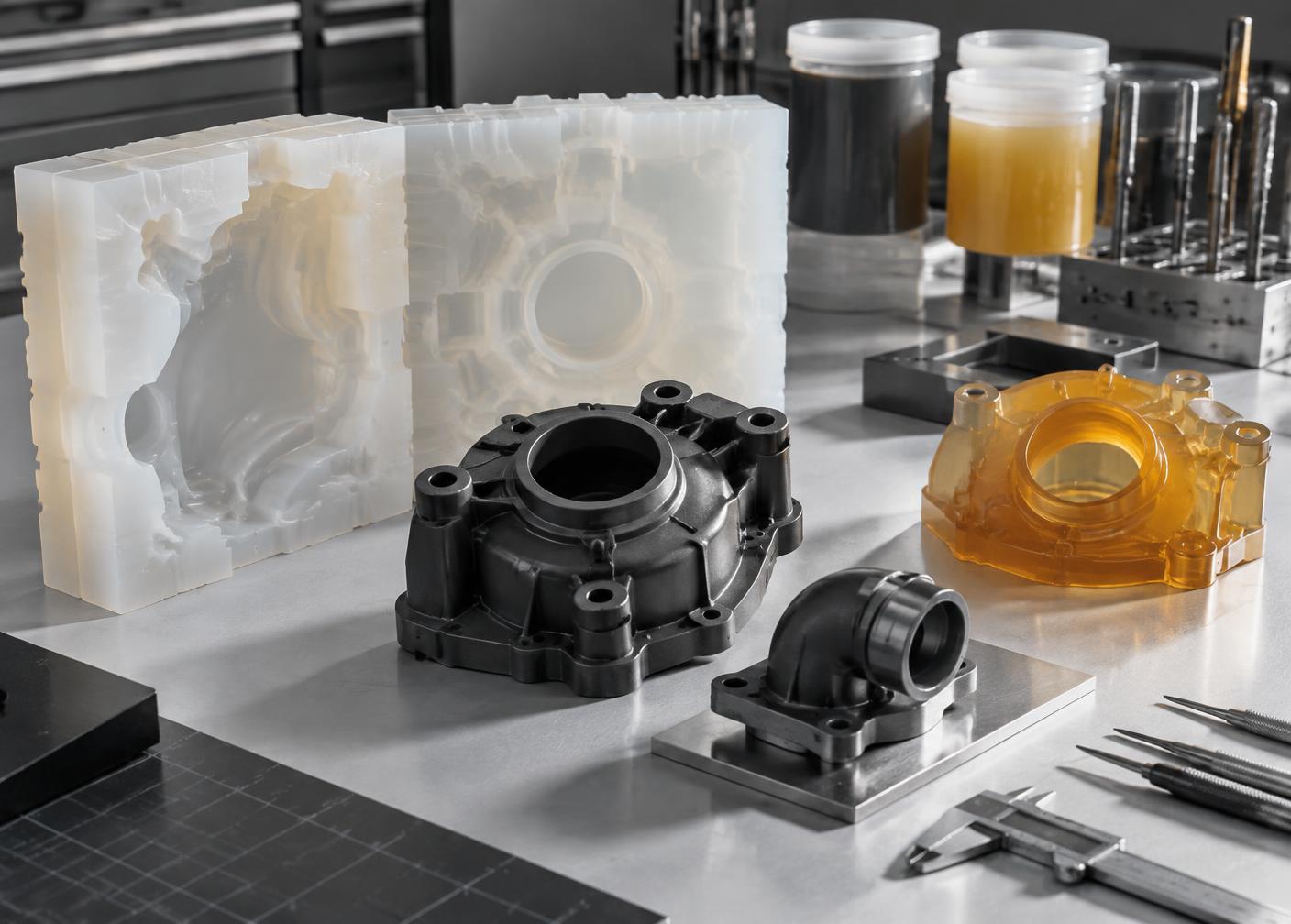
Capability 03
Production-quality parts without production tooling—ideal for functional validation, bridge builds, and low-volume demand.
Overview
Process capability
Material properties can be selected to approximate production intent for handling, assembly, fit, and functional evaluation.
Cast urethane supports design iteration and broader testing before committing to production tooling.
Low-volume casting can bridge the gap while production tooling is built or while demand is still developing.
Parts can be produced in a range of colors, appearances, durometers, and surface textures depending on the selected system.
Threaded inserts, embedded hardware, painting, and other finishing requirements can be evaluated during project review.
Workflow
Master Pattern
Silicone Mold
Material Selection
Casting
Finishing
Inspection
Materials
Applications
Production volumes
Best suited to low-volume requirements where production-like parts are needed without the time or investment of hard tooling.
Engineering considerations
Quality & inspection
Critical dimensions, material requirements, finish expectations, first-article needs, and documentation are reviewed against the supplied specifications before the manufacturing approach is finalized.
FAQs
Cast urethane uses silicone molds and is generally suited to lower volumes. Injection molding uses hard tooling and is typically selected for scalable repeat production.
They can achieve production-like color, texture, and appearance, subject to geometry, master pattern quality, and material selection.
Mold yield varies with geometry, material, finish, and process conditions. FPM will evaluate the project and plan the required mold set accordingly.
Have a project?